Introduction to the Mobilehome Park Industry
From Trailer Camps to Manufactured Housing Communities
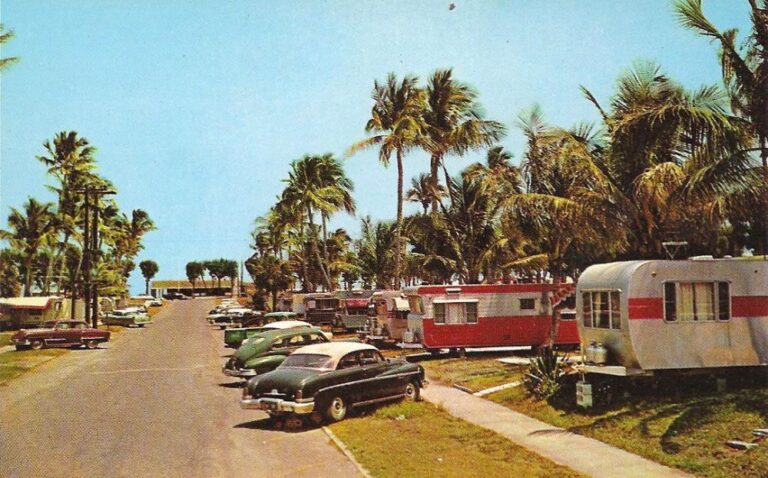
Trailer camps began appearing throughout California in the late 1930’s, popping up around vacation destinations near beaches and deserts and in the agricultural areas for migrant workers. These camps were designed as a temporary land use to provide lodgin for people towing “caravans” and travel trailers. Some remain as trailer parks, while others sitting on valuable land have been redeveloped.
Most of the “typical” mobilehome parks in the state were built in the 1960’s and 70’s. Like the older trailer camps, many were built for interim use on former farmland, with temporary conditional use permits (CUPs) from local cities and counties to build the parks. One of the primary incentives to build a mobilehome park was the ability to realize income from the land to help pay the increasing property taxes. Prior to the adoption of Proposition 33 in 1978, California tax assessors taxed property on the basis of hits highest and best use. Farmland was being developed on major highways in commercial and industrial areas. It was also common for landowners to lease land to a mobilehome park developer.
The parks built in the 1960’s and 70’s focused on providing larger spaces for new doublewide mobilehomes. They also focused on building a lifestyle to attract retirees. Clubhouses, pools, shuffleboard, a place to store RVs, and organized activities topped the list of amenities. Retirees could sell their stick-built home and purchase a new mobilehome, leaving behind maintenance and yard work so that they could enjoy the modern facilities at the new mobilehome park. In the mid 60’s, a typical new doublewide mobilehome sould for around $15,000 in a new park, and rents were $75 or less – about half the cost of a new site-built home of a similar size – but with a lot more amenities and a lot less to worry about.
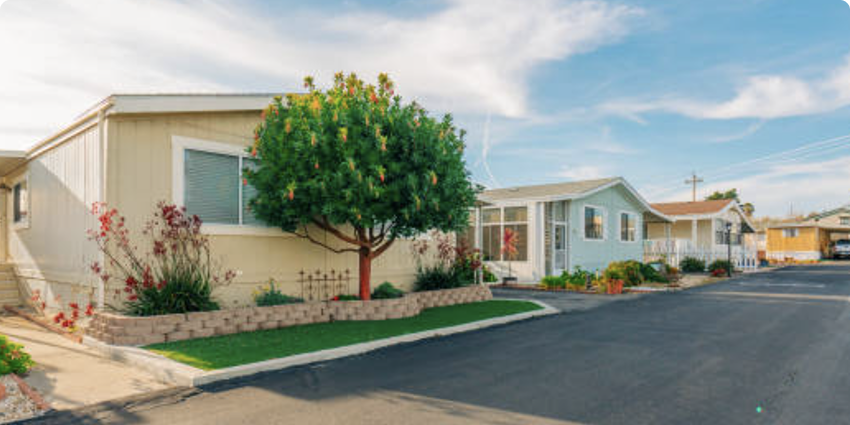
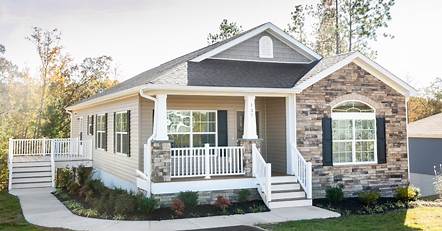
Manufactured Homes have evolved in design and quality to match site-built homes with ground level installation and site-built garages. The neighborhoods have taken on the look of a site-built project but with “country club” amenities and an attractively affordable price tage.
Due to the increasing cost of land and development fees, less than a handful of new parks have been built since the 60’s and 70’s.
From Senior Housing to Family Housing
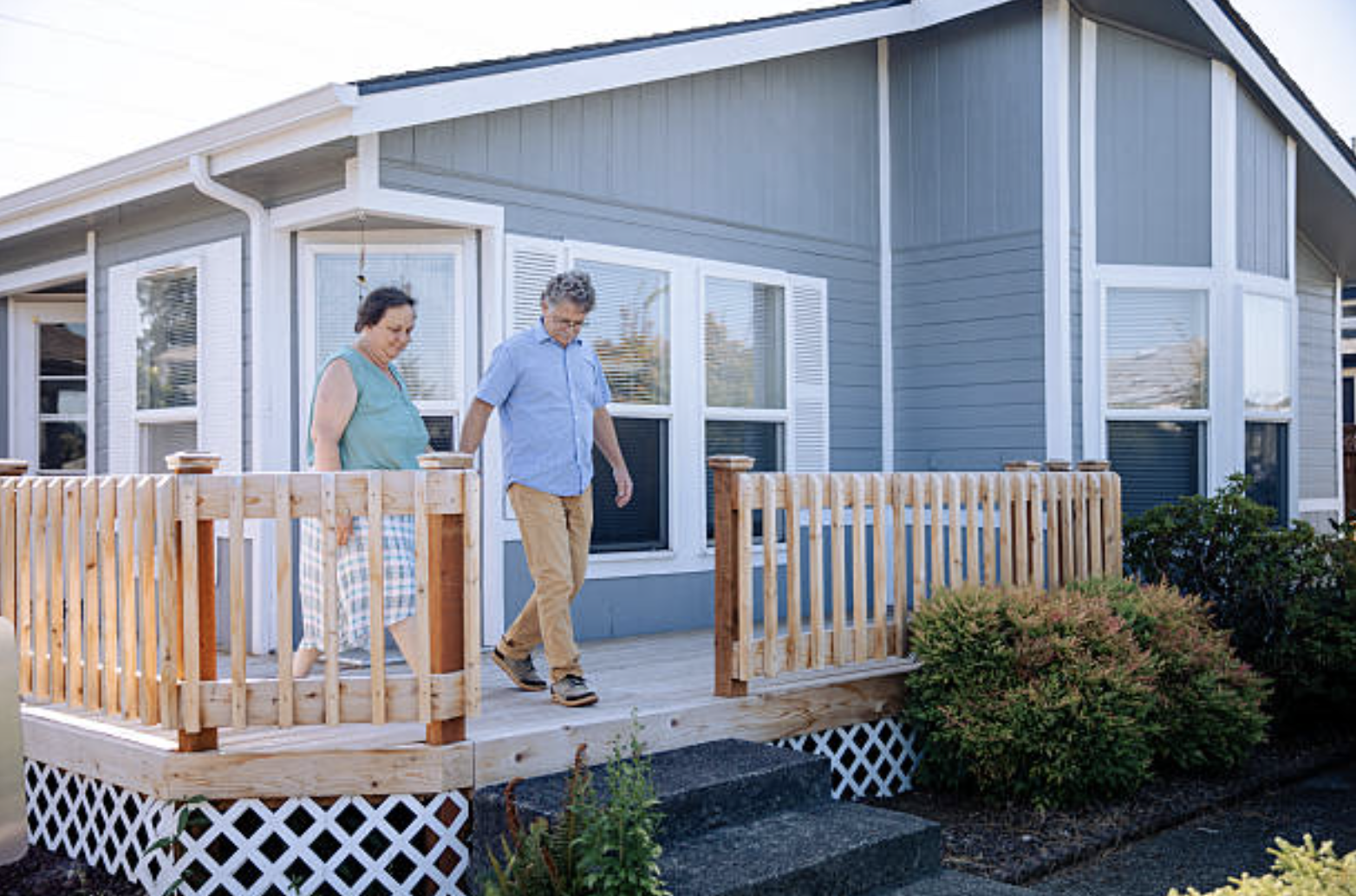
The typical mobilehome parks built in the Souther California region tin the 1960’s and 70’s were established as senior parks to attract persons aged 55 and older. The average homebuyers were looking for like-minded neighbors and a more carefree lifestyle that reduced home maintenance responsibilities. Most communities provided clubhouses where residents gathered for various activities.
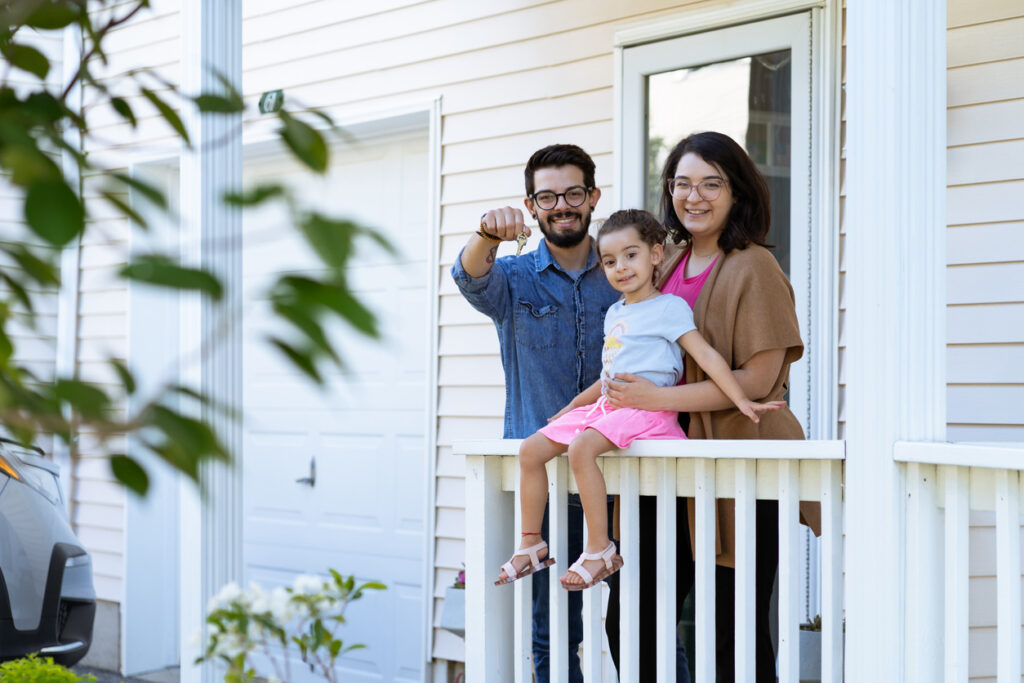
in 1988, the federal government amended the Fair Housing Act to prohibit discrimination on the basis of disability and familial status. With the act, Congress intended to also preserve housing specifically designed to meet the needs of senior citizens. To accomplish this, they exempted “housing for older persons” from the law’s familial status requirements under the condition that the housing provides “significant services and facilities” for seniors and
- Is occupied solely by persons who are 62 or older
- Or it houses at least one person who is 55 or older in at least 80 percent of the occupied units and adheres to a policy that demonstrates intent to house persons who are 55 or older.
Attainable, Affordable Housing – Not Low-Income Housing
Unfortunately, the “trailer trash” sterotype and perceptions that trailer parks are a place where poor lived has been a stigma mobilehome parks have worked hard to change. Today’s mobilehome parks are manufactured housing communities provide an affordable and attainable housing alternative to all ages and income groups.
Mobilehome owners own their homes and rent the land/lot the home sits on. Along with renting the lot, all services are provided – just like in a little city, the owner of the park provides management, maintenance, onsite facilities, streets, utilities, etc. The rent paid pays for the cost of the services and maintenance. Costs increase every year, hence, the rent increases every year to cover the costs. Many California mobilehome owners own their home free and clear and only have a monthly rent payment.
Laws Regulating the Mobilehome Park Industry Enforced by HCD
California law governing mobilehome parks is entitled the “Mobilehome Parks Act” and may be found in Section, Part 2.1 of the California Health and Safety Code, commencing with section 18200.
These laws establish requirements for the permits, fees, and responsibilities of park operators and enforcement agencies, including the Department of Housing and Community Development, and require HCD to develop and enforce both the regulations and the laws.
The rights and obligations of mobilehome park homeowners, tenants and management may be found in the Mobilehome Residency Law Handbook (PDF).
Mobilehome Park regulations (updated 4-1-2013) are found in the California Code of Regulations, title 25, chapter 2, commencing with section 1000. The regulations include specific requirements for park construction, maintenance, use, occupancy, and design. Also included are requirements for items such as lot identification, lighting, roadway width, plans, permits, mobilehome installation, accessory structures and buildings, earthquake resistant bracing systems, application procedures, fees, enforcement, and appeal procedures.
Frequently Asked Questioned About the Mobilehome Park Lifestyle
Q: Are mobile home parks/manufactured housing communities low-income housing?
A: No. They are generally more affordable than some other forms of housing, but it depends on the location. Affordable housing developments have income limit requirements that mandate residents meet low-income requirements to move in. That is not the case in a mobile home park. Homeowners of all income levels enjoy the manufactured housing community lifestyle.
Q: Are there low income mobilehome owners living in rental parks?
A: Sometimes long-term residents who have enjoyed living in their mobiilehome for years do not have the income to keep up with the increase of costs and rent because they have lost a spouse and the additional income, as an example. In those cases, there are rental subsidy programs available. Private rental assistance funda are available from the individual park owners as well as from Federal programs such as Section 8.
Q: How is mobile home park/manufactured home community living different than other forms of rental housing – like apartments?
A: Mobile home owners who live in manufactured housing communities enjoy single or multi-story, private detached homes located on a rented lot/space. Parking is typically located adjacent to the home, and there are amenities like a clubhouse and pool in most parks. The owner of the mobile home/manufactured home is responsible for all maintenance of the home and the site the home is sitting on.
Q: How is it the same as other forms of rental housing?
A: The owner of the mobile home rents the land the home sits on. There is a monthly rental fee paid for the land, services, and facilities provided as a resident of the park. Like apartment rentals, renting a space in a mobile home park will increase typically on an annual basis. Also like apartments, there are rules and regulations that all residents must comply with. Be sure to read and understand them before you purchase a home in the park.
Q: How does buying a manufactured home and living in a mobile home park compare with owning a home on private property?
A: Owning a home on private property means you own the home and the land. There is one mortgage payment for the home and the land. In a mobile home park you may have two payments – a mortgage if you take out a loan to purchase the mobile home and the monthly space rental payment. In both cases, whether you live in a mobile home park and rent the land, or if you own the home and land, you are responsible for maintaining the home and the lot the home sits on.
Q: Why are older mobile homes located in an existing park more expensive to buy than a new manufactured home from the factory?
A: Older mobile homes sell for more than the Blue Book value of the home because it is being sold “in place”, and the new buyer is paying for the value of the location of the home as well as the value of the land and services that come with the purchase of a mobile home located in a community.
Q: What do mobile home owners like best about mobile home park living?
A: The location, the affordability, the overall sense of community, and private homes with small yards/patios and adjacent parking.
Q: How are rental amounts and increases determined in mobile home parks?
A: Rent rates in mobile home parks are determined the same as other rental housing – by comparable market rents for the area. As the costs to maintain and operated the community increase, so do rents.
Q: What determines the sales price of a mobile home?
A: Just like other homes, location is the primary factor. The same home located near the ocean will sell for more than one located inland and the rent will typically be higher. The age and condition of the home is also a factor.
Q: What is the difference between a pre-HUD mobile home/trailer, and a manufactured home?
A: Mobile homes, trailers, and manufactured homes are all built in a factory. Homes built after 1976 are built to a higher Federal Housing and Urban Development (HUD) standard. Older homes, or pre-HUD (Housing and Urban Development) homes, will typically need significantly more maintenance and will not have the same insulation, windows, etc. as a HUD built home. New manufactured homes not only look much better, but are a higher quality than older mobile homes.
Q: When rents fall significantly below market rate rents because of rent control, who is hurt?
A: The new home buyer is hurt because they have to pay a high artificially inflated price for the home because the rent is below market.
Q: Who benefits when rent control is imposed on a mobilehome park?
A: There is one beneficiary of mobile home rent control and that is the person living in the home and renting the space when rent control is adopted. First, they benefit from low rents and second, they benefit when they sell their home for an artificially inflated amount way above the true value of the mobile home.